
Autonomous QA for lean teams: why shipping at scale requires intent-based testing

June 2025. A Series B fintech company ships code three times daily. Their implementation time dropped 50% after adopting AI coding assistants. But their release cycle is stuck at two weeks. I analyzed this pattern across several high-growth startups last month. The engineering team grows, feature output triples, and suddenly, the QA process becomes a linear scaling trap. You cannot solve a velocity mismatch by hiring more manual testers. That just adds human overhead to a broken architecture.
Autonomous QA for lean teams is the only way to break this constraint. Most tools today are script generators that automate the typing, not the thinking. They help you write a Playwright test faster, but a human expert still has to define the test case. You are still paying for the hiring lags and communication gaps that stall every feature release.
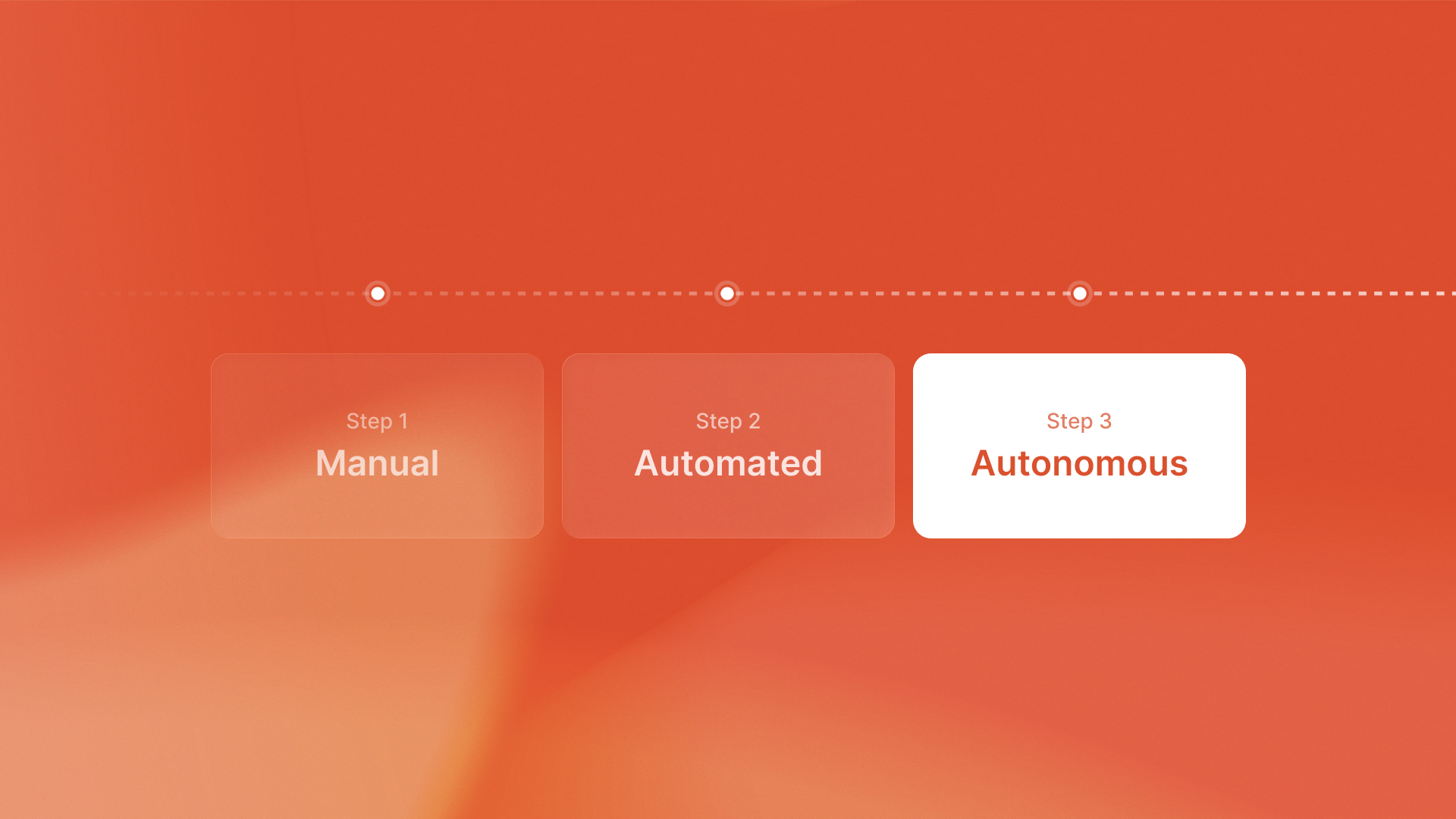
The jump from automation to autonomy
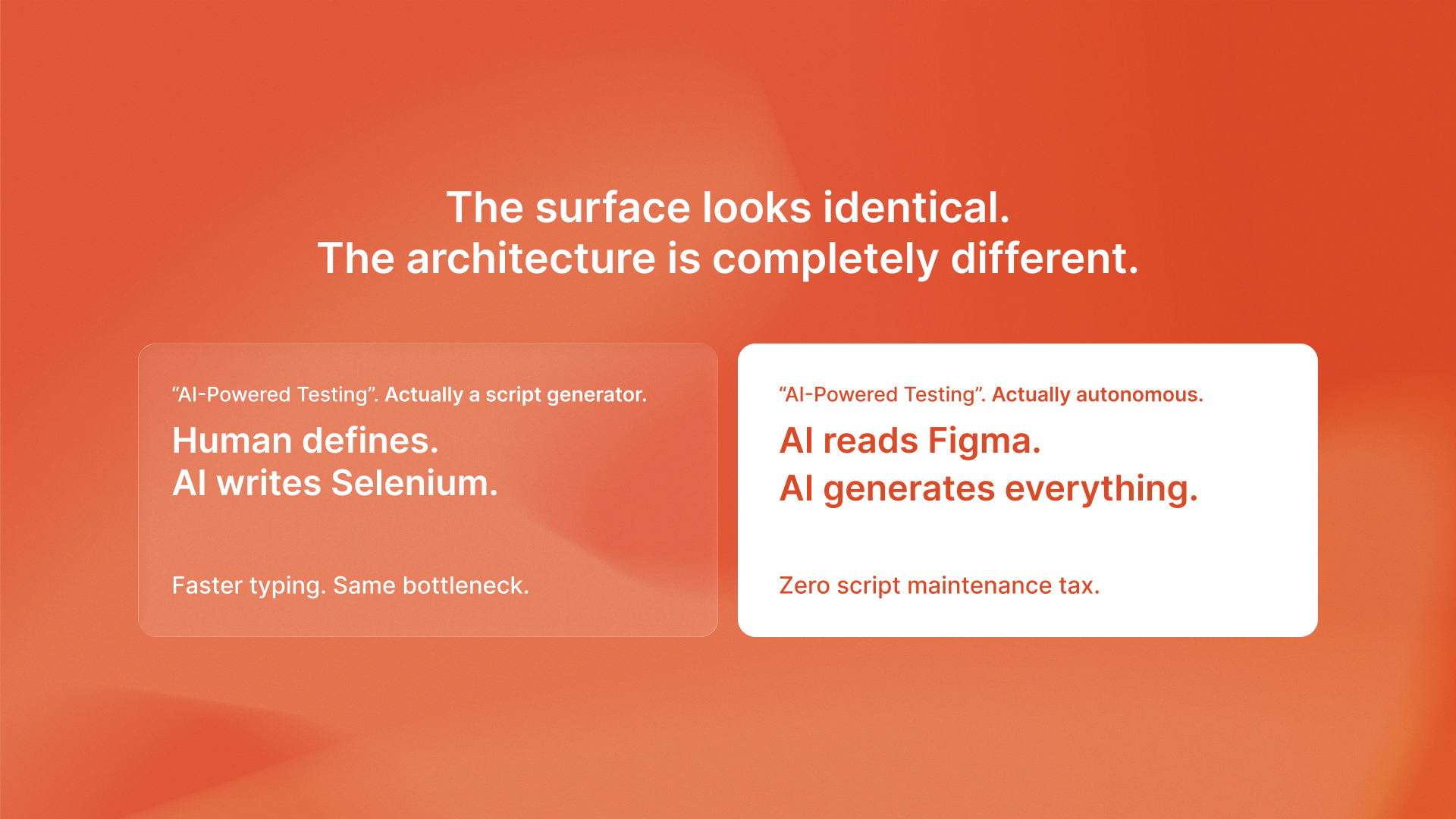
There is a massive distinction between automated and autonomous testing. Most “AI-powered” tools are merely Selenium with a chatbot. They help you maintain selectors (execution automation), but they don’t solve test generation. Autonomous testing systems read your design artifacts and code changes to understand what needs verification without human input.
According to GitHub, agile teams use AI software testing agents to manage lifecycles with minimal touch. This is how a lean team beats a 500-person enterprise. They use task-specialized AI-native architectures to remove the manual scenario planning phase entirely.
Automated testing: Humans define scenarios: AI writes the code.
Autonomous testing: AI reads Figma: AI generates the scenarios and the code.
Maintenance burden: Script-based tools break on refactors: autonomous systems adapt to intent.
Why figma to test generation matters
If you use Figma, you already have the blueprint for your quality standards. The manual translation of a design into a QA ticket is a primary source of error. Figma to test generation lets you skip brittle scripts by turning designs into intent-based tests.
Intent-based testing
Intent-based testing is superior because it ignores CSS selectors. It validates whether the user can actually complete the checkout or registration task. I saw this firsthand at Islands. A developer refactored the entire DOM, causing every implementation-based test to fail on a Friday afternoon. Intent-based tests stayed green because the user flow remained identical to the design specs.
Building the foundation for speed
You cannot solve a velocity problem by adding people at the end of the delivery line. You must build repeatable processes before you hit the scaling limit. This logic applies to your engineering stack as much as your hiring sequence. While some teams try to mimic SEO depth through volume, technical leaders win by focusing on absolute accuracy.
I recommend using QA flow for teams that need to scale capacity without increasing headcount. It acts as a force multiplier for existing engineers. Instead of managing a fleet of manual testers, your senior leads oversee a system that performs the heavy lifting. This shift from manual execution to system oversight defines a mature technical organization.
What autonomous QA actually automates
Test generation: Reads Figma components to create 100% coverage suites.
Severity classification: Analyzes network logs to prioritize bugs automatically.
Regression testing: Detects how code changes in GitHub affect existing user flows.
This operational efficiency is reflected in modern business utilization metrics. When you remove the manual testing bottleneck, engineers can spend 80% of their time building. They no longer spend 40% of their time fixing broken scripts. Even small e-commerce brands are starting to see the QA flow benefits of reducing operational friction.
The takeaway
Elite development teams deploy 208x more frequently than low performers because they removed the validation bottleneck. Autonomous QA for lean teams is the bridge that allows you to ship flawless sites at the speed of your design team. Stop hiring for manual roles and start building for autonomous velocity. LinkedIn content strategy often focuses on presence, but for a founder, technical velocity is the ultimate signal of authority.
Ready to eliminate your validation bottlenecks? Start shipping faster with QA flow.