
Autonomous Testing vs. Automated Testing: Why the Architectural Difference Matters

Every testing vendor now claims AI capabilities. The term means wildly different things.
Some tools use AI to generate Selenium scripts faster. Others suggest test cases based on code changes. Some use multi-agent systems to create, run, and manage tests from design specifications. This is done without human-defined test cases.
For engineering leaders evaluating tools, this distinction matters. One improves efficiency. The other fundamentally changes what’s possible.
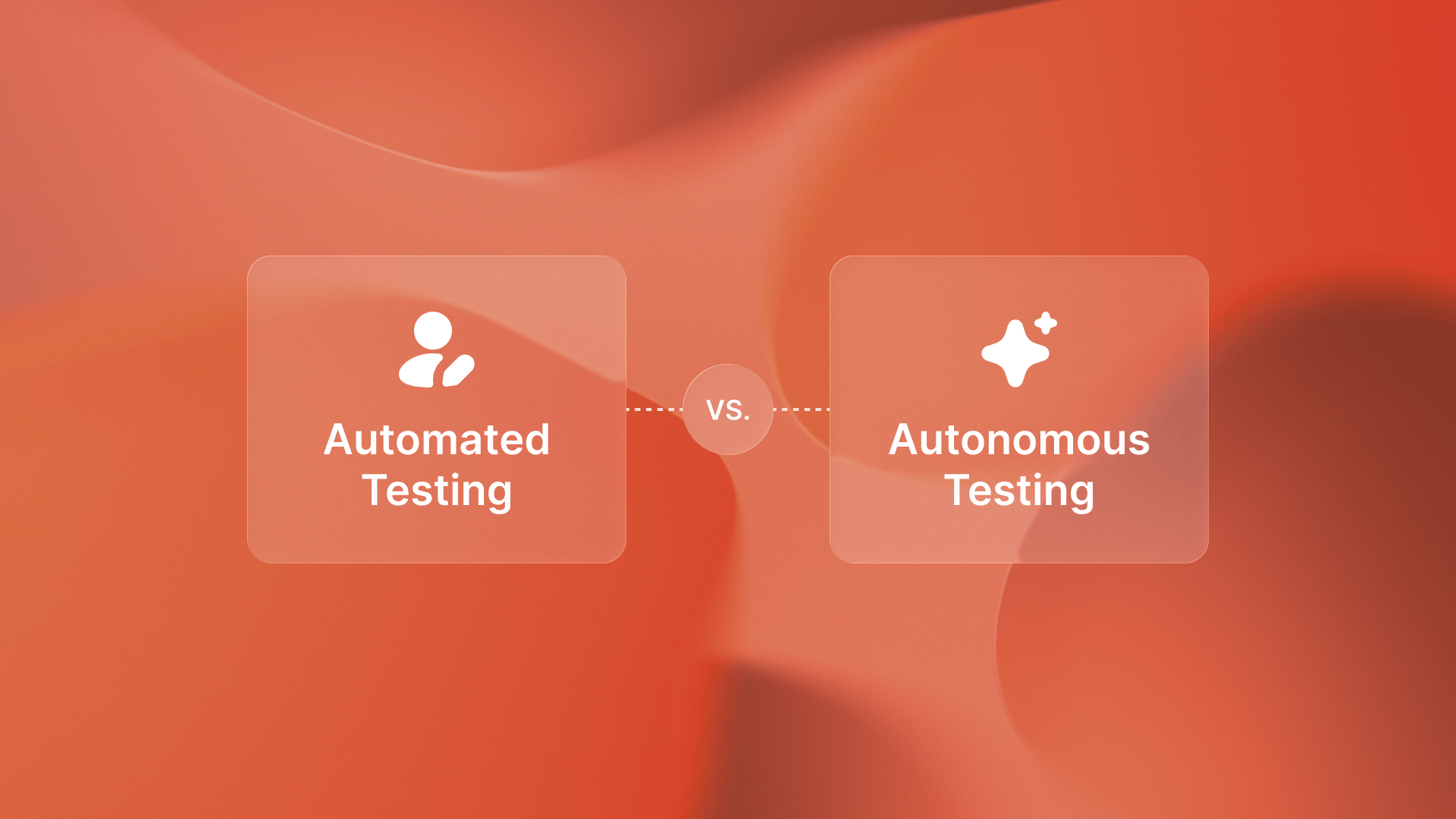
The market created a new category for a reason
Forrester shifted their research category in 2025. From Continuous Automation Testing Platforms to Autonomous Testing Platforms.
The distinction is architectural. Automated testing means humans write tests and machines execute them. Autonomous testing means AI agents write, run, and maintain tests.
This wasn’t a rebrand. Multi-agent systems that create tests from design specs need different evaluation criteria. This is unlike automation tools with AI plugins.
I was talking to the team at Islands last month. They manage dev hours across 8-15 client projects simultaneously. When they examined testing tools for their clients, they discovered something interesting. Ninety percent of “AI-powered” tools still required humans to create test cases first. The AI just helped write the scripts faster.
That’s automation with better tooling. Not autonomy.
Where test intent originates changes everything
Automated testing executes human-written test scripts faster. Autonomous testing generates, executes, and maintains tests without human-defined test cases.
The architectural difference lies in where test intent originates.
Automated systems codify intent from human QA engineers. You write a test that clicks login, enters credentials, checks for dashboard. The automation framework runs that script reliably. Add AI, and it might help you write the script faster or suggest edge cases. But you still defined what to test.
Autonomous systems derive intent from design specs and commits. A tool like QA flow reads your Figma designs and GitHub commits. It understands what the feature should do from the design. It generates test cases based on that specification. No human wrote “test the login flow with valid credentials.” The system inferred that from the design artifact.
This matters because intent-based testing from design specs tests behavior specifications rather than implementation details. Autonomous tests validate “what should happen” from the design. Automated tests validate “how it’s implemented” through CSS selectors and DOM structure.
One survives refactors. The other breaks when you rename a class.
Most tools solve the wrong bottleneck
Here’s what the adoption data reveals. 61% of QA teams are adopting AI-driven testing to automate routine tasks. Only 15% have achieved enterprise-scale implementation.
The gap exists because most tools aren’t delivering autonomy. They’re delivering automation improvements.
Automation solves the execution speed problem. Run tests faster. Run them in parallel. Get results sooner. Those are real benefits for teams with comprehensive test suites.
Autonomy solves the test generation problem. Most engineering teams don’t have comprehensive test suites. They have incomplete coverage because writing tests is the bottleneck. QA engineers spend weeks defining test cases, writing scripts, maintaining selectors that break on every refactor.
The global automation testing market is projected to expand from $19.97 billion in 2025 to $51.36 billion by 2031. Autonomous testing platforms represent the fastest-growing segment.
That growth reflects market recognition. Test generation, not execution automation, is the real constraint.
Evaluating tools requires architectural clarity
When I dug into this with engineering leaders, the confusion became clear. Every vendor claims AI capabilities. None explain where the AI sits in the architecture.
Here’s the framework that matters:
Does the tool generate test cases autonomously from design artifacts? Or does it help humans write test scripts faster?
Does it orchestrate multi-agent systems for test generation, execution, and reporting? Or does it enhance single-purpose automation frameworks?
Those questions determine whether a tool scales QA capability or just improves QA team efficiency.
Last week I was reviewing Timecapsule‘s testing approach. They track profitability in real-time, which means their calculations need constant validation as pricing models change. They found that AI tools for script generation made them change test cases each time they updated their pricing logic. The scripts broke. The test intent stayed in human heads.
When they moved to autonomous testing that read their design specs, the tests survived refactors. The system understood “verify accurate profit calculation” from the specification. It didn’t care how the calculation was implemented.
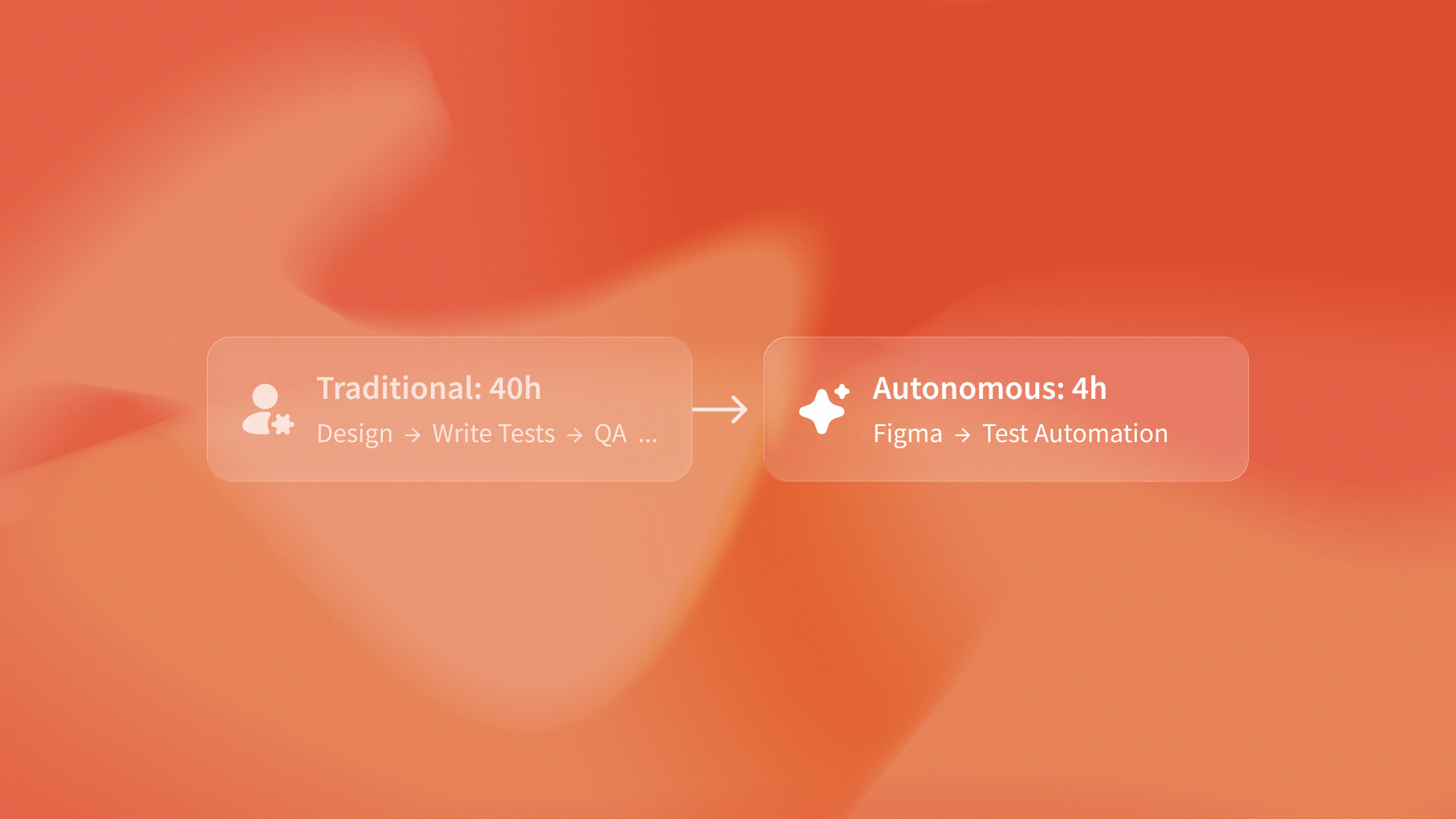
That’s the difference between helping QA engineers work faster and removing the test-writing bottleneck entirely.
The distinction determines what’s possible
Automated testing makes human-written tests run faster and more reliably. Autonomous testing removes the human test-writing bottleneck by generating tests from design intent.
When assessing “AI-powered” testing tools, engineering leaders should ask where test intent originates.
If humans still define test cases and the AI helps write scripts, that’s automation. If agents derive test cases from Figma designs and GitHub commits, that’s autonomy.
The architectural difference determines whether the tool scales QA capability or just improves QA team efficiency.
The takeaway
Autonomous testing platforms are growing fastest because they solve the bottleneck that matters. Not execution speed. Test generation.
For teams evaluating tools, the question isn’t “Does it use AI?” The question is “Where does test intent originate?”
If the answer is still “from human QA engineers,” you’re buying better automation. If the answer is “from design specifications and code commits,” you’re buying autonomy.
That distinction changes what’s possible for engineering teams. One makes your QA team faster. The other makes comprehensive testing achievable without expanding headcount.
Try QA flow if you want to see what autonomous test generation from Figma designs looks like in practice.