

Growth-stage engineering teams face an impossible tradeoff.
Scale QA proportionally and costs explode. Accept slower release cycles and competitors win. Implement test automation and watch it break on every refactor.
I have been thinking about this problem for months. Every VP Engineering at a Series B or C startup has lived this pain. You have tried at least one of these paths. Maybe all three.
The numbers tell the story. Large QA teams grew from 17% of organizations in 2023 to 30% in 2025. Despite massive automation investments, less than 20% of testing is actually automated. The DevOps pipeline bottleneck persists.
Here is what I have noticed: the industry has accepted this tradeoff as inevitable. Engineering leaders choose their poison and live with the consequences.
But there is a fourth path that eliminates the tradeoff entirely.
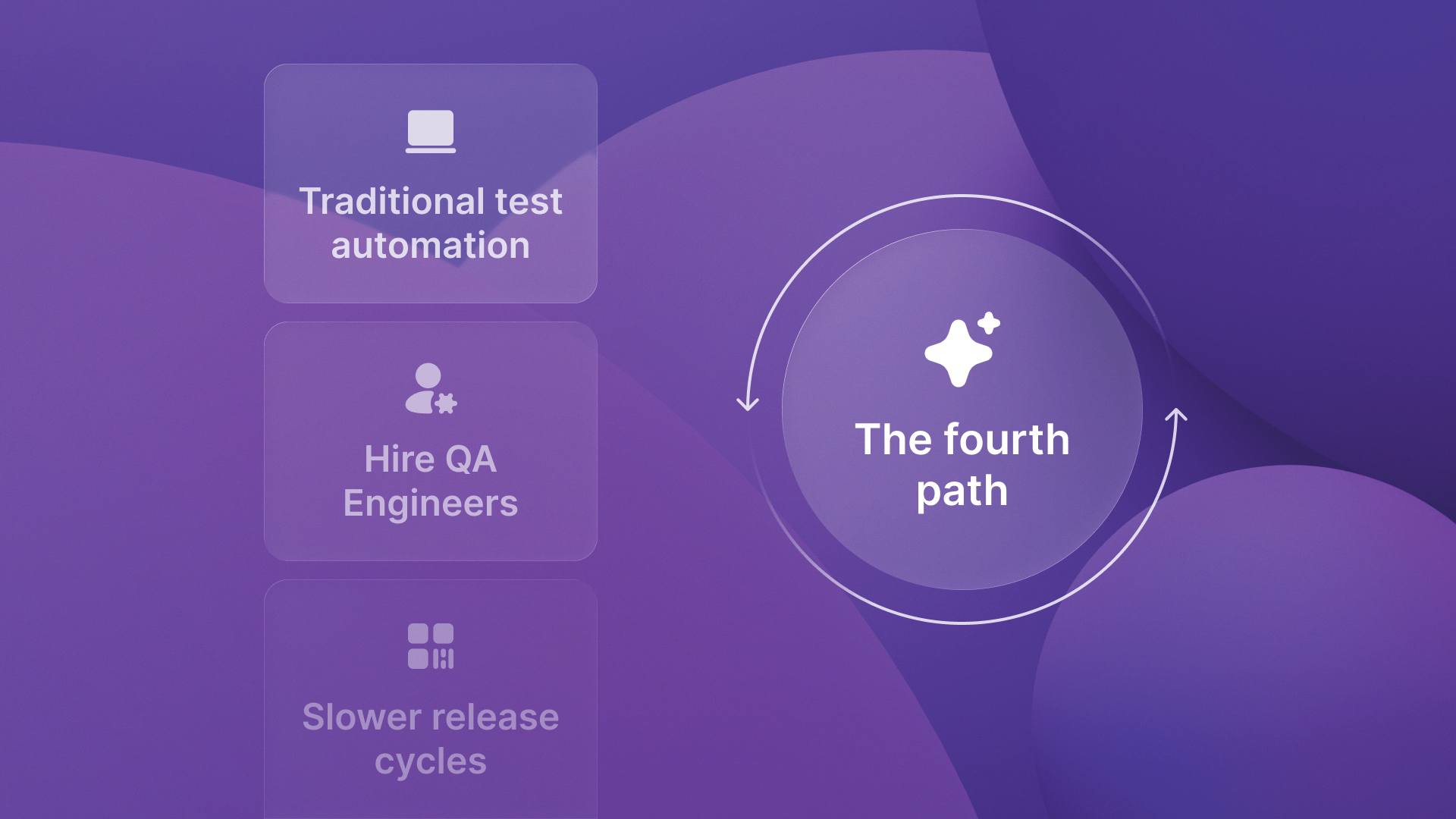
The QA Bottleneck: Why Three Traditional Approaches All Fail
Growth-stage engineering teams face an impossible tradeoff.
Scale QA proportionally and costs explode. Accept slower release cycles and competitors win. Implement test automation and watch it break on every refactor.
I have been thinking about this problem for months. Every VP Engineering at a Series B or C startup has lived this pain. You have tried at least one of these paths. Maybe all three.
The numbers tell the story. Large QA teams grew from 17% of organizations in 2023 to 30% in 2025. Despite massive automation investments, less than 20% of testing is actually automated. The DevOps pipeline bottleneck persists.
Here is what I have noticed: the industry has accepted this tradeoff as inevitable. Engineering leaders choose their poison and live with the consequences.
But there is a fourth path that eliminates the tradeoff entirely.
Traditional Approach #1: Hire QA Proportionally
The math seems simple at first. Add engineers, add QA. Keep the ratio stable.
I was talking to Islands last week about their fractional CTO work. They manage dev hours across 8 simultaneous client projects. One client went from 12 engineers to 45 in nine months.
Their QA team scaled from 4 to 18 people. The ratio stayed at 1:2.5 engineers.
Here is what they discovered: QA costs grew faster than engineering costs. Manual testing required coordination overhead that scaled exponentially, not linearly. Bug triage meetings consumed 12 hours per week. Test case documentation became a full-time job for two people.
The breaking point: their QA cycle stretched from 3 days to 14 days despite adding headcount. More people created more communication overhead, not faster testing.
This approach fails because manual QA does not scale linearly with codebase complexity. It scales exponentially.
Traditional Approach #2: Accept Slower Release Cycles
Some teams take the opposite approach. Keep QA small and accept longer cycles.
Two-week QA cycles become standard. Releases shift from weekly to monthly. Product teams adjust roadmaps around testing capacity.
This works until competitive pressure intensifies. Your competitor ships weekly. You ship monthly. They iterate four times for every one of your releases.
The market does not care about your QA bottleneck. Users choose the product that improves faster.
I saw this play out at a fintech startup in Q3 last year. They maintained a lean 6-person QA team supporting 50 engineers. Release cycles stretched to 18 days on average.
Their competitor launched three major features in the time it took them to ship one. Market share shifted 8% in six months.
This approach fails because speed is a competitive advantage you cannot surrender.
Traditional Approach #3: Implement Test Automation
The obvious solution: automate testing with Selenium, Cypress, or Playwright.
Every engineering leader has tried this. Write test scripts once, run them forever. Achieve that mythical 80% automation coverage.
Here is what actually happens: test scripts break on every UI refactor. CSS selectors change. Component structures shift. Your automation suite becomes a maintenance burden that requires constant human updates.
Last month I looked at testing data from a SaaS company running 2,400 Cypress tests. After a design system migration, 847 tests failed. Not because of bugs. Because selectors changed.
Their QA team spent three weeks updating test scripts. The automation that was supposed to save time became a full-time maintenance job.
Traditional test automation fails because it tests implementation details, not behavior. When implementation changes (which happens constantly during refactors), tests break.
This is why less than 20% of testing stays automated in most organizations. The maintenance burden is unsustainable.
The Fourth Path: Autonomous Testing
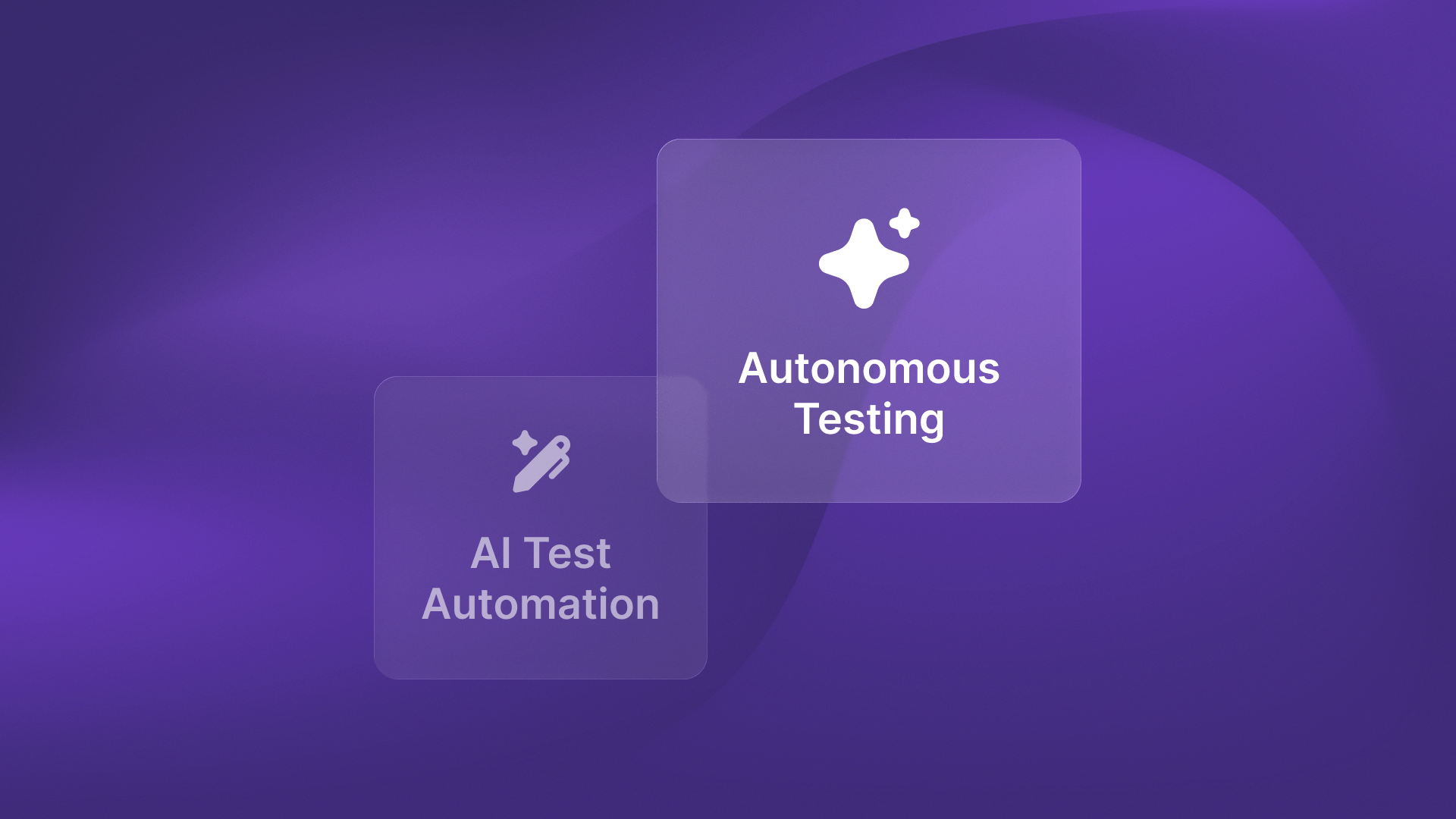
Autonomous testing is fundamentally different from automated testing.
Automated testing executes human-written test scripts faster. Autonomous testing generates tests from design intent.
Here is the architectural difference: traditional automation relies on brittle selectors (CSS classes, IDs, XPath). When you refactor code, these selectors break. Tests fail even when functionality is correct.
Autonomous testing generates tests from Figma specs and design documentation. It tests intended behavior, not implementation details. When you refactor code, behavior-based tests stay valid.
I watched QA flow run tests through a complete React-to-Vue migration at a client company. The component structure changed entirely. Traditional Selenium tests would have needed total rewrites.
The autonomous tests kept running. They tested “user can complete checkout” not “button with class checkout-btn-primary exists.” Implementation changed, behavior did not.
That is the category difference. Autonomous systems eliminate the maintenance burden that makes traditional automation unsustainable.
Why This Matters Now
The industry is already shifting. 89% of organizations are piloting generative AI-augmented QE workflows to address the QA scaling challenge.
But only 15% have achieved enterprise-scale implementation. Most AI-powered testing tools just generate Selenium scripts faster. They inherit the same brittleness.
Real autonomous testing requires a different architecture: design spec parsing, intent extraction, multi-agent orchestration. Systems that understand what the application should do, not just what the current implementation looks like.
This is not incremental improvement. It is category innovation.
The Takeaway
The QA bottleneck is not inevitable. It is the result of a false tradeoff between speed, quality, and cost.
Autonomous testing eliminates this tradeoff by generating durable tests from design intent. Tests that survive refactors. Coverage that scales without proportional headcount.
The shift is already underway. Engineering leaders are moving from execution automation to generation automation.
Try QA flow if you are ready to explore autonomous testing for your team. Or start with qaflow.com/audit for an instant audit of your current testing approach.
The question is not whether autonomous testing will replace traditional approaches. It is whether you adopt it before your competitors do.