
Why Test Automation Doesn't Solve Your QA Scaling Problem

I have been thinking about something that does not get enough attention in engineering leadership. The gap between test automation and true QA scaling is one example.
Most teams think they’re solving it. They’re not.
The Automation Misconception
Here’s what’s happening. Your team adopted Selenium. Or Cypress. Maybe Playwright. You invested in CI/CD pipelines. You hired QA engineers who write automated test scripts. Tests run faster now.
But you’re still hiring QA engineers proportionally to your development team size.
That’s the tell. If automation solved scaling, you would not need to keep adding QA staff. This would still be true as engineering grows from 50 to 200 to 500 people.
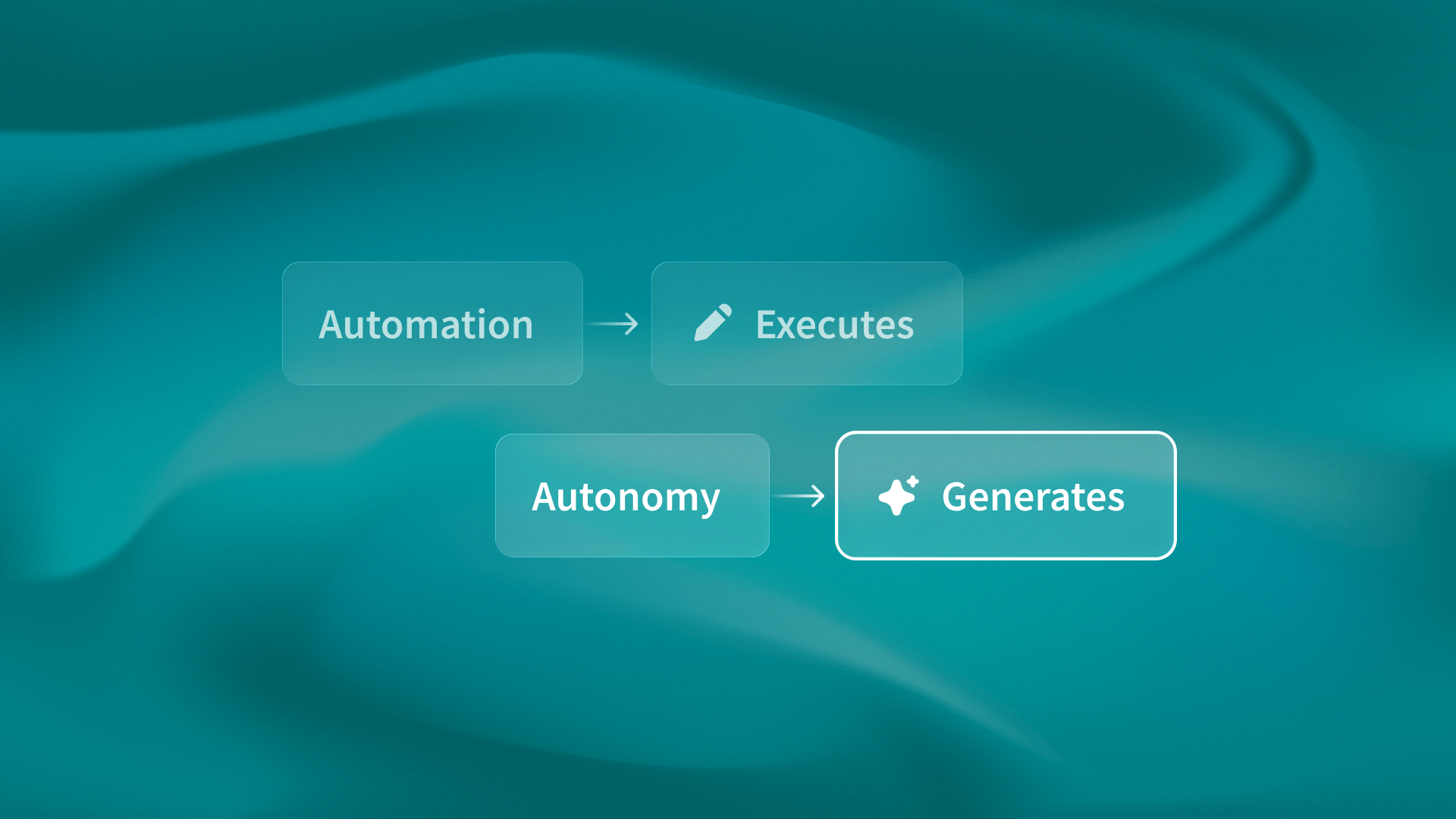
The reason is simple: those tools automate test execution, not test case generation.
Someone still has to write the test scripts. Someone still has to maintain them when your codebase changes. Someone still has to define what behaviors to test and translate that intent into code.
That someone is a human. And humans don’t scale linearly with engineering velocity.
The Data Tells the Story
Last week I was talking to the team at Islands, and they shared something revealing about their client projects. They manage dev hours across multiple simultaneous builds. The pattern they kept seeing was clear. Teams would invest heavily in test automation tools. They would celebrate faster test execution. Then, six months later, they would hit the same bottleneck. They needed to scale development velocity.
The test automation market is scaling to over $29 billion this year. Yet 82% of testers still use manual testing daily. Only 45% automate regression testing.
Those numbers don’t match. If automation solved the problem, manual testing would be rare, not ubiquitous.
What’s happening is this: teams automate the easy part, running tests. The hard part, creating and maintaining test cases, stays fully manual.
Execution Speed vs. Generation Overhead
The QA scaling problem isn’t about test execution speed. It’s about test case generation and maintenance overhead.
Think about your current workflow. A developer ships a feature. A QA engineer has to:
Understand what the feature should do
Translate that intent into test scenarios
Write test scripts (Selenium locators, Cypress commands, whatever)
Maintain those scripts when implementation details change
Update tests when refactors break CSS selectors or DOM structure
Steps 1-5 are entirely manual. Automation only helps with step execution.
This is why teams exploring AI-driven testing workflows increased to 72.3% by 2024. Everyone recognizes the bottleneck. But most AI solutions still focus on making step 3 easier. Write test scripts faster. Generate boilerplate code. Suggest selectors.
That’s still human-driven test case generation. Just slightly faster.
What Autonomous Actually Means
I noticed something interesting when I looked at how QA flow approaches this. They’re not automating test script writing. They’re generating tests from design intent.
Here’s the difference.
Traditional approach: Human reads Figma design → Human writes test script → Tool executes test.
Autonomous approach: System reads Figma design → System generates test cases based on what should exist → System executes and validates.
No human writes test scripts. Ever.
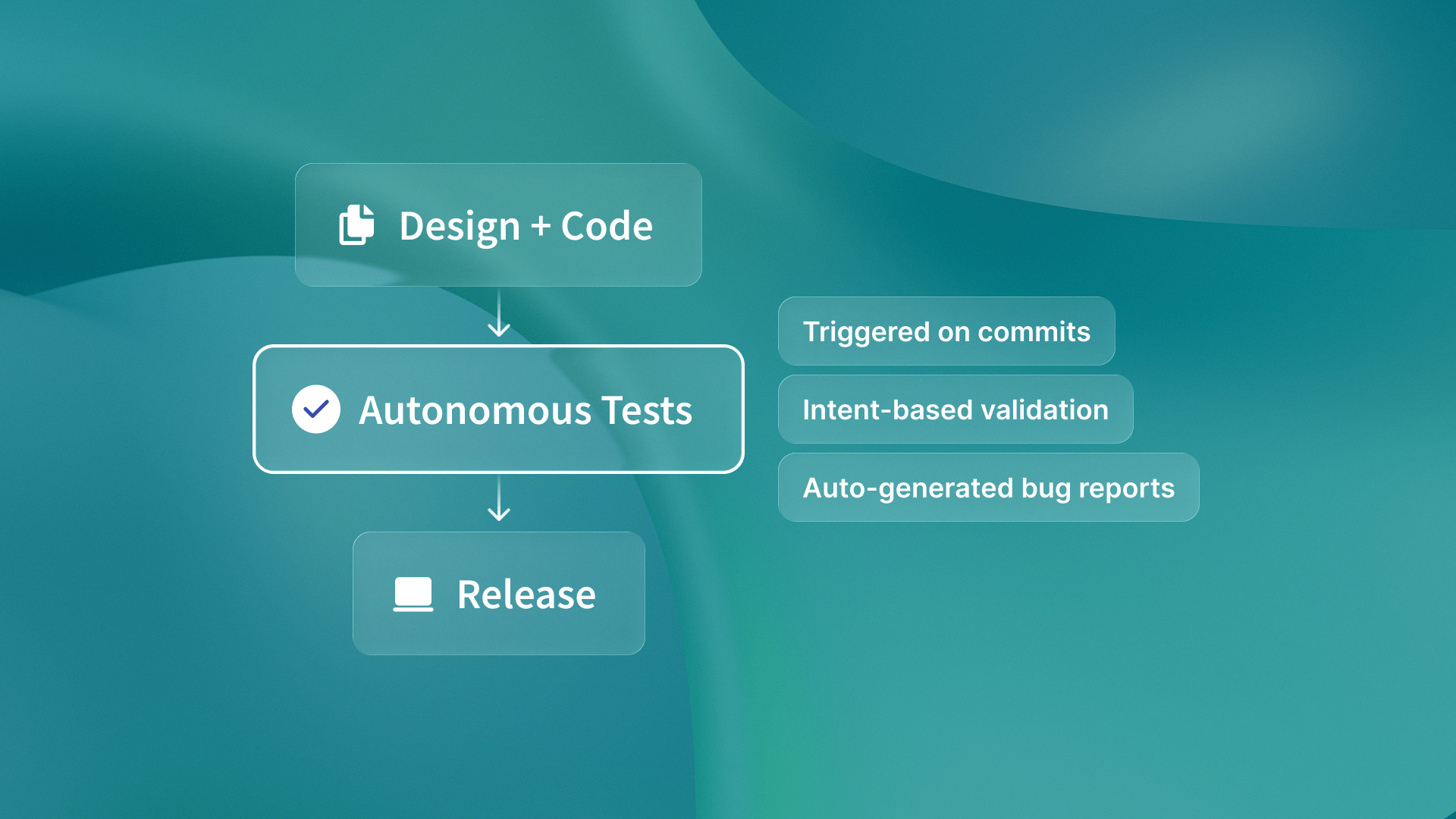
The system reviews Figma specs and GitHub commits to learn expected behavior. Then it creates tests that confirm that behavior. When code refactors happen, tests stay valid because they’re testing design intent, not implementation details like CSS selectors.
That’s why intent-based testing is resilient. Traditional automated tests often break during refactors.
This happens because they depend on implementation details.
For example: “Click the button with class .submit-btn-primary.”
Intent-based tests check behavior.
They follow design specs, like “a user can submit the form.” They still work if you change the DOM structure or rename CSS classes.
The Complete Workflow Gap
There’s another piece most teams miss. True autonomy isn’t just about test generation. It’s about the entire workflow.
Your current process probably looks like this:
QA engineer runs tests (automated or manual)
QA engineer finds a bug
QA engineer writes a bug ticket
QA engineer goes back and forth with developers about reproduction steps, network logs, what data was used
Developer finally has enough context to investigate
Even if test execution is automated, everything else is manual communication overhead.
I saw an example of this recently with a team using Timecapsule for tracking QA hours. They were spending more time on bug ticket back-and-forth than on actual testing. The issue wasn’t test execution speed. It was the communication overhead of translating test failures into actionable developer context.
Autonomous testing eliminates that entire workflow. Tests generate automatically. When they fail, the system creates detailed bug tickets with network logs, broken endpoints, and failed requests. It also includes steps to reproduce the issue and a severity level. Developers get everything they need without QA-developer ping-pong.
That’s the workflow transformation most teams don’t account for when evaluating automation tools.
The Choice You’re Actually Making
Here’s how to think about your options.
Option one: Continue automating test execution while humans write test cases. You’ll run tests faster, but you’ll still need QA headcount to scale proportionally with your engineering team. Test maintenance will remain manual. Refactors will break tests. You’ll spend engineering cycles on test infrastructure instead of features.
Option two: Adopt autonomous testing that generates tests from design intent. Zero human-written test cases. Tests stay valid through refactors. Complete workflow automation including bug ticket generation. QA headcount decouples from engineering team growth.
The scaling problem isn’t about running tests faster. It’s about eliminating the human bottleneck of test case creation entirely.
Most teams are solving the wrong problem. They’re optimizing test execution when the real constraint is test generation and maintenance.
That’s the difference between automated and autonomous. Automation executes what humans define. Autonomy generates tests from intent.